

Get your fresh news on science and technology in Switzerland
Provided by AGP
Quantum Model of the Universe: A 12-Volume Study of the Structural Architecture of Modern Physics
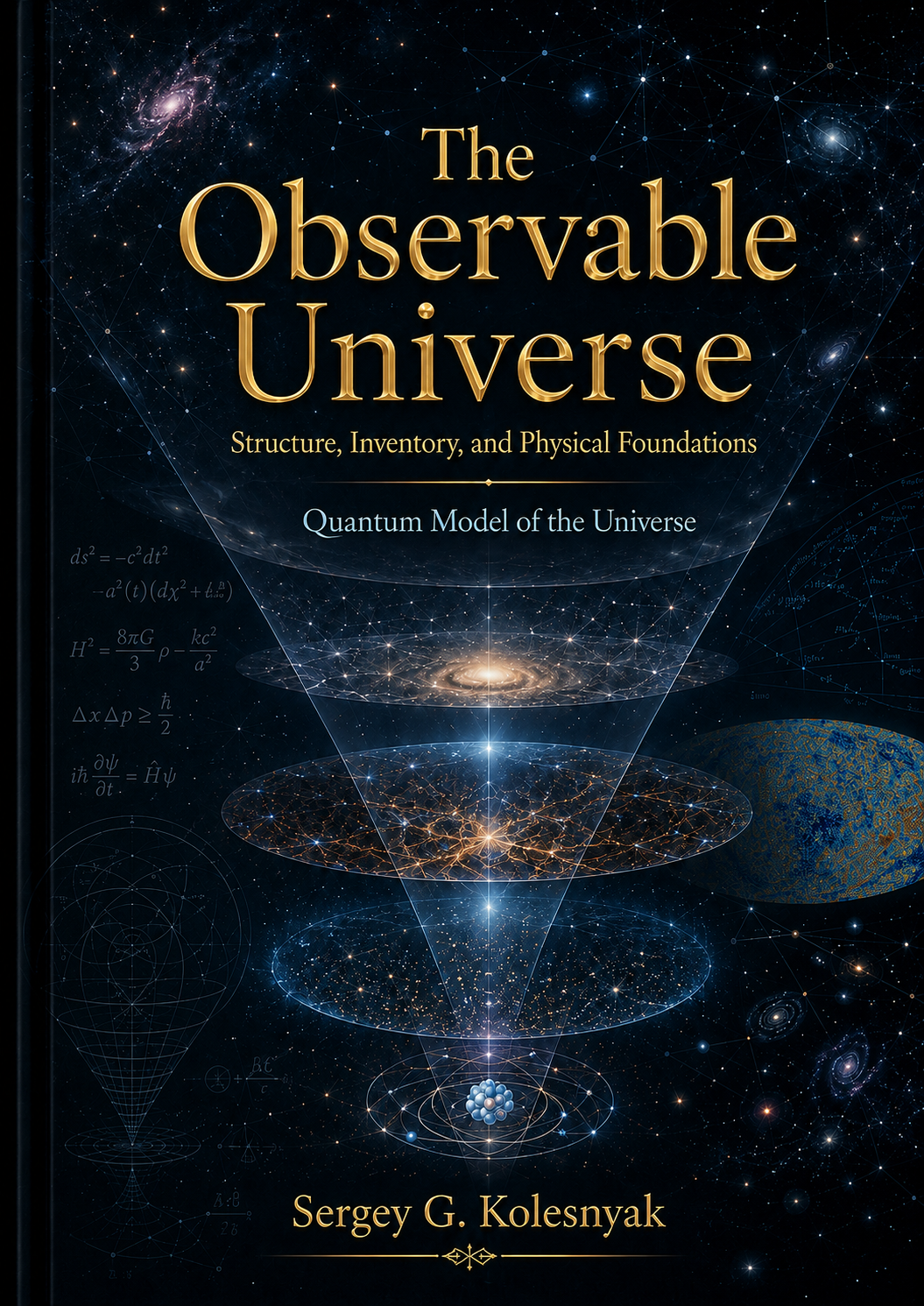
Quantum Model of the Universe — a structural vision connecting classical physics, quantum theory and cosmology into a unified picture of the Universe
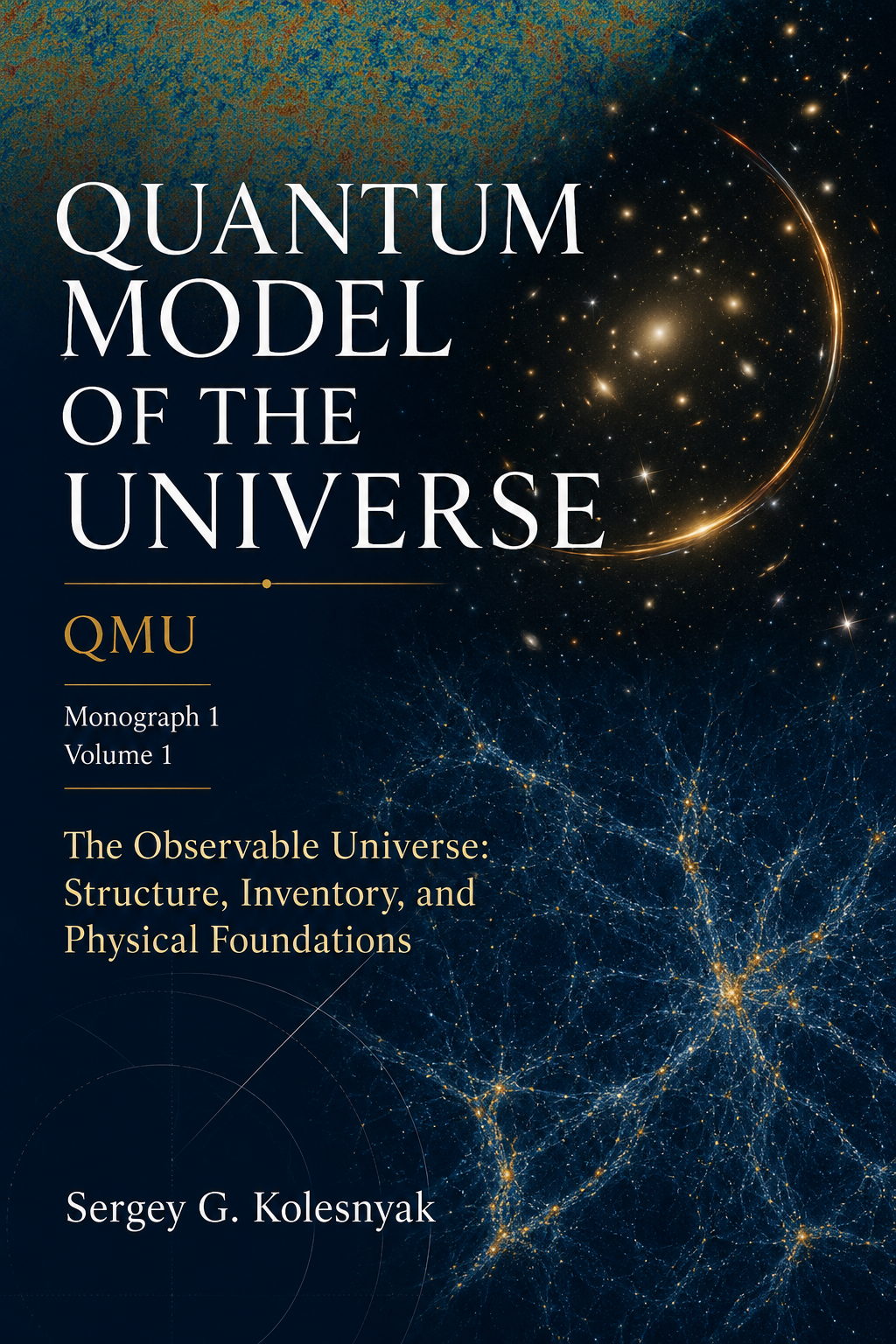
Modern science has vast data but lacks a common structure. QMU seeks the logic that connects the microworld with cosmic evolution, turning scattered discoveries into a coherent vision of the Universe.
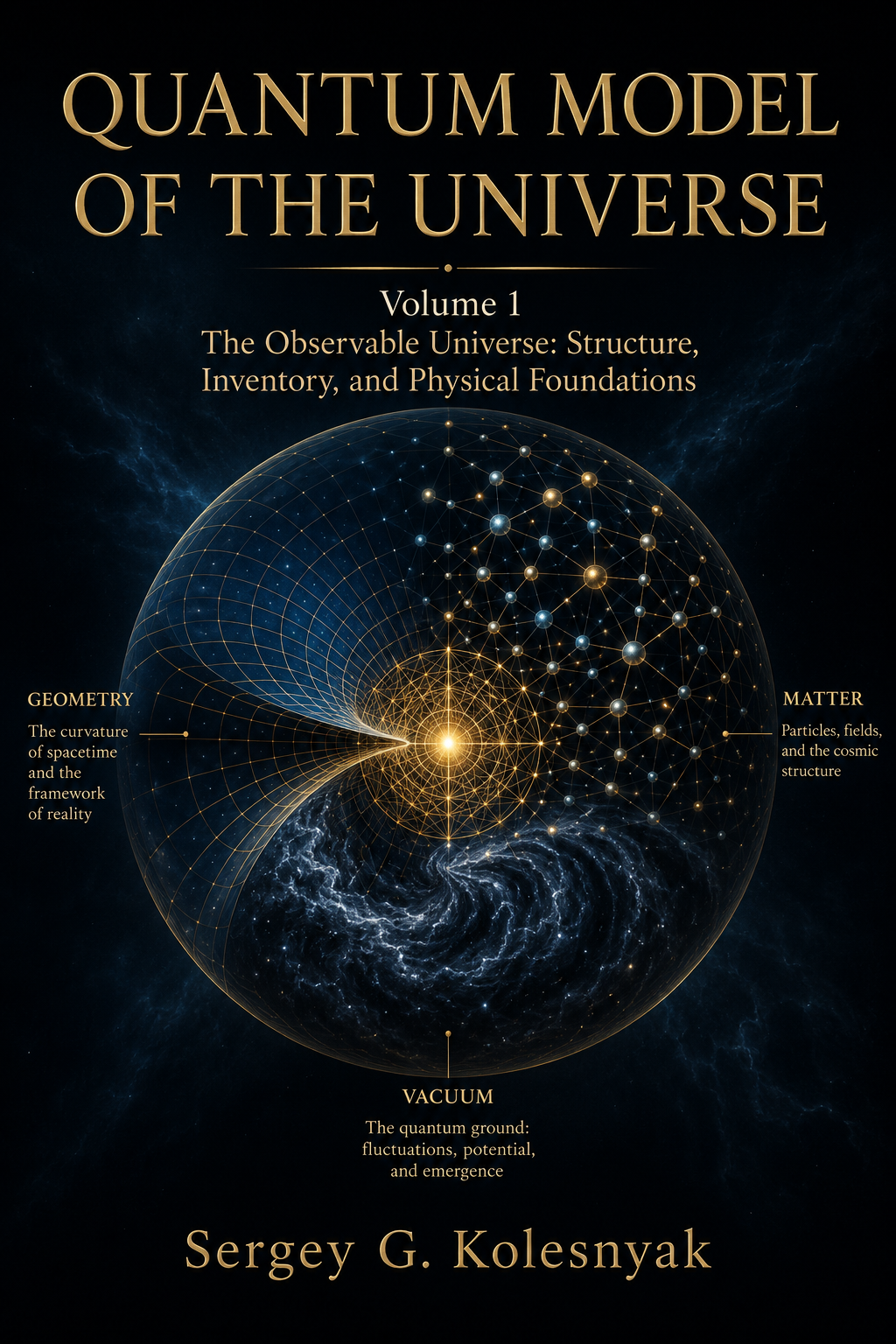
Quantum Model of the Universe brings modern physics together — from classical theory and quantum fields to cosmology — into a single structural picture of the Universe, across space, time and matter.
On 23 May 2026, a scientific conference of the **World Academy Awards was held in Switzerland and dedicated to the Quantum Model of the Universe project.
Quantum Model of the Universe brings modern physics together — from classical theory and quantum fields to cosmology — into a single structural picture of the Universe, across all physical scales”
GENEVA, SWITZERLAND, SWITZERLAND, May 24, 2026 /EINPresswire.com/ -- The 12-volume scientific series Quantum Model of the Universe (QMU) has been completed. Comprising more than 4,000 pages, the multi-year research project is devoted to one of the central tasks of contemporary fundamental science: the systematic description of the Universe on the basis of observational cosmology, quantum physics, relativistic gravitation, vacuum physics and high-energy astrophysics.— Sergey G. Kolesnyak
On 23 May 2026, a scientific conference of the World Academy Awards was held in Switzerland and dedicated to QMU. The conference presented the principal results of the work, its 12-volume structure, its scientific logic and its significance for the systematization of modern views of the Universe. Particular attention was given to QMU as an attempt to connect classical physics, quantum theory and cosmology within a single structural system of analysis.
The work was prepared by a research group under the scientific direction of Sergey G. Kolesnyak. At its centre is not the construction of another isolated “theory of everything”, but the systematic organization and structural reconciliation of the levels of physical knowledge that currently describe the Universe in fragmented form: from elementary particles, quantum fields and fundamental interactions to dark matter, dark energy, large-scale structure, the early Universe and cosmological evolution.
The project analyses more than 500 major discoveries, theorems, observational results, experimental constraints and conceptual achievements in modern physics and cosmology. QMU treats these results not as a dispersed body of data, but as elements of a unified structural picture in which classical physics, quantum theory and cosmology are compared within a common architecture for describing the Universe.
A central concept of the project is structural admissibility: a criterion for analysing the conditions under which existing physical theories, mathematical models and empirical data can be jointly applied to the Universe as a whole. Through this approach, QMU examines dark matter, dark energy, the Hubble tension, the early formation of massive structures, the structure of the vacuum, the geometry of space-time and the fundamental parameters of cosmological evolution.
The QMU series is organized into four major monographs, each consisting of three volumes.
Monograph I — “The Observable Universe: Structure, Inventory, and Physical Foundations” treats the observable Universe as a measurable physical object. It includes the “Passport of the Universe” — a systematic inventory of its principal parameters, scales, objects, fields, interactions, particles, constants and cosmological regimes. This monograph establishes the empirical foundation of the series, from microphysics and vacuum states to galaxies, clusters, the cosmic web and accelerated expansion.
Monograph II — “Fundamental Discoveries and Structural Conditions of Modern Physics” analyses the fundamental discoveries and structural conditions of modern physics: the vacuum, quantum fields, bosonic and photonic carriers, dark sectors, antimatter, gravitational regimes, geometric microstructure and the limits of existing models. Its purpose is to identify hidden assumptions, internal connections and limitations rather than restate known results.
Monograph III — “Evolution of the Universe and Fundamental Physical Constants” examines cosmological evolution, fundamental constants and the parameters of the Universe, with special attention to how microphysical processes, vacuum structure and the global dynamics of the cosmos may be connected through common structural constraints and testable observational criteria.
Monograph IV — “Quantum Geometry, Primordial Structure, and the Architecture of the Universe” forms the synthetic part of the project. It addresses quantum geometry, primordial structure, early cosmological regimes, the conditions for matter formation and possible directions for further theoretical and experimental testing.
The project has received scientific assessments from specialists representing university, physical-mathematical and scientific-engineering communities.
Vladimir V. Darovko, Candidate of Physical and Mathematical Sciences at Saint Petersburg State University, describes the work as a “large-scale, conceptually rich study” aimed at identifying fundamental structural connections between quantum theory, general relativity and cosmology. He emphasizes its shift from the traditional task of unifying physical theories to the analysis of the conditions under which they can be jointly applied, and characterizes it as “not merely a review, but a deep analytical study”.
Ya. N. Kask, Associate Professor and Candidate of Physical and Mathematical Sciences at Admiral Makarov State University of Maritime and Inland Shipping, notes that QMU treats tensions between quantum theory, relativistic gravitation and observational cosmology not as isolated parametric discrepancies, but as manifestations of deeper structural constraints within the architecture of physical theories. In his assessment, the work is constructed as an integrated system of analysis, from microphysics and vacuum structure to space-time geometry and cosmological dynamics.
Igor E. Vinogradov, Candidate of Physical and Mathematical Sciences at JSC Scientific Production Center for Automation and Instrument-Making / Roscosmos, Moscow, evaluates QMU as a comprehensive and conceptually structured investigation of a central problem in modern physics: the relationship between quantum theory, gravitation and cosmology. His assessment emphasizes that the project differs from conventional extensions of the Standard Model or ΛCDM by focusing on the conditions under which existing theoretical frameworks can be consistently combined.
The authors express their gratitude to the international scientific organizations, missions, laboratories and collaborations whose open data, observations, catalogues, experimental results and peer-reviewed publications form the empirical basis of the work. These include NASA, ESA, CERN, the Large Hadron Collider, ATLAS, CMS, DESI, Planck, the James Webb Space Telescope, the Hubble Space Telescope, LIGO–Virgo–KAGRA, SDSS, BOSS/eBOSS, ACT, SPT, the Event Horizon Telescope, Super-Kamiokande, SNO, the Particle Data Group and other research collaborations.
According to the author group, River Publishers has signed a contract to publish several volumes of the series and distribute them to universities, scientific communities, libraries and research laboratories. The base edition has been prepared in English; in parallel, the series is being translated into eight languages, including Russian, Chinese, French, German, Spanish, Italian, Portuguese and Dutch.
QMU is addressed to specialists in cosmology, theoretical physics, quantum theory, gravitation, astrophysics, philosophy of science and mathematical modelling. Its aim is not to replace modern physics, but to assemble and systematize its key achievements within a single research architecture capable of showing the limits, connections and conditions of joint applicability of contemporary physical descriptions.
Copies of the series, including author-signed editions, can be ordered or purchased by contacting: intellectpictures@gmail.com.
Serge Kolesnyak
World Academy Awards
intellectpictures@gmail.com
Legal Disclaimer:
EIN Presswire provides this news content "as is" without warranty of any kind. We do not accept any responsibility or liability for the accuracy, content, images, videos, licenses, completeness, legality, or reliability of the information contained in this article. If you have any complaints or copyright issues related to this article, kindly contact the author above.
